
WORLD RADIO NORMANDY CAEN
All of Normandy, in English
France
October protests: Are French media giving protesters a voice or focusing on violence?
by

2 November 2026
Protests continue in France as students, workers, and activists gather to oppose the rising cost of living, poor conditions in schools, and now the systematic banning of marches in city centres. Government and press responses to the initial protests seem to have only fuelled the fire as protesters question how the movement is depicted in the media.

How has the French media been covering recent protests over cost of living? | © Thomas Lacour and Licia Henneberg (artwork by Sebastien Pollock) // World Radio Normandy Caen
In the wake of weeks of protests across France, many activists are concerned that their goals are getting muddled among news reports of marches coming to violent ends. WRNC conducted a media analysis of nine major news sources in France to see how this story is being covered.
We analysed an article from before 17th October, between 17th and 24th October, and after 24th October to get a sense of how coverage has evolved over the course of the 17th and 24th October protests. Articles from the following sources were included: Le Monde, Libération, Ouest-France, Le Point, RTL, Radio France, France 24, BFM, and TF1.
We identified five main topics in the coverage of the protests.

The “why” of the protests
Despite concerns that the protesters’ motivations are being ignored, these were covered by the media, albeit often minimally. Many articles limited their discussion of this topic to one or two lines. More than one source described the marches as being “against an expensive life” and left it at that. One BFM piece simply described the movement as “social anger” before moving on to other topics. On average, media outlets spent about seven per cent of any given piece discussing why the protests were taking place to begin with.
Strikingly, and notably validating the concerns of many protesters, six of the twenty-seven articles analysed made no mention of the reasons for the demonstrations at all. This trend could be found across different news outlets, including Le Monde, Radio France, and Ouest-France, though the main offender of this particular omission was Le Point. Out of a total of 2,706 words across three articles, Le Point attributed fewer than 100 words to the subject of the protests. Given the newspaper’s typically conservative lean, this may not come as a surprise.
On the flip side, TF1 showed a notably high percentage of coverage of protest motivations. Unlike many other sources, TF1 interviewed protesters and included their testimonies in its coverage of both 17th and 24th October. Rather than condensing the movement to a single bemoaning “the cost of living”, the first two TF1 articles went into the specific complaints and demands of both students and workers. Similarly, a Le Monde article from the evening of the 17th and a Ouest-France piece from the 24th seemed notably supportive of the protesters, centring their thoughts on how the day’s marches had gone. The Le Monde story, in particular, gave voice to protesters who defended the rioting. One student was quoted as stating, “The State is violent and the rioting is the popular response to this violence.”
One might expect the space given to this topic to change over time, especially as writers assume that the reasons for the marches have become common knowledge. The data confirms this, as most of the sources analysed showed a downward trend. There were exceptions: Le Monde, RTL, and Ouest-France did not follow this pattern.

Le Monde showed a spike in coverage in its piece following the protests of the 17th. Both RTL and Ouest-France gradually increased their coverage over time. Given that both tend to sit in the centre of the political spectrum, it is surprising to see them outpace more left-wing publications like Libération in covering the concerns of those protesting.
Making predictions
The second topic we looked at was that of speculation, outlets predicting what was to come. This topic included discussions of how many protesters were expected on each march date and how the press and government expected the protests would play out. While much of this speculation was neutral, some was politically charged. One RTL piece stated, “The presence of the ultra-left is particularly feared, with an ‘operational force’ estimated at 5,000 militants in France, who are in a position to organise ‘offensive action’, degradation, and violence against law enforcement.” In fact, RTL far exceeded other news sources in its penchant for speculation.
Ouest-France was an outlier in the other direction. Its coverage focused on events that had already taken place. The only example of speculation was in a 24th October piece. The newspaper quoted a protester who said that “the risk of riots at the end of the protest is real.”
Interestingly, the newspapers analysed made fewer speculations on what might occur next when compared to both radio and TV stations. While an average of just over three per cent of each newspaper article covered this subject, nine per cent of radio and eight per cent of TV station pieces did.
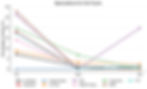
Of course, at the beginning of this movement, news sources and readers knew less of what to expect from the demonstrations than they would later on. As a result, the percentage of the analysed articles that was attributed to making predictions largely dwindled over time. One notable exception was RTL. In a 26th October article, the station was looking forward to the next protest date planned for Halloween, while most other outlets were reflecting on the events of 24th October.
Once the dust had settled
Just as the disgruntled protesters claimed, the direct outcomes of each demonstration were consistently the most or second-most-covered topic in the French media. This category primarily includes summaries of riots, broken or damaged infrastructure, arrests, injuries, and profit loss. It should be noted, however, that statements such as “the day passed calmly” were also included in this topic.
An article published on the evening of the 24th for Le Monde attributed 204 out of a total of 606 words to the outcomes of the protests. Of those 204, only seven were used to express that the night had been largely calm. This pattern was common across media outlets. Violent outcomes were consistently highlighted in headlines and in article bodies, while one sentence would admit that the demonstrations unfolded without incident for the most part.
Nearly a fifth of the coverage analysed fell under this topic. Ouest-France gave the most attention to the damages and injuries that resulted directly from the protests. An 18th October piece summarised the number of arrests, prominent damaged buildings, and injuries to both protesters and law enforcement across eight regions and major cities. This accounted in large part for its 27 per cent average in this category. This article summarised the reasons for the protest in six words out of its total 2,600.
France 24 and Libération were the only two sources analysed that didn’t see the direct outcomes of the marches as their primary topic of coverage. In both cases, this type of reporting only began following 24th October.

Given that coverage of the movement picked up across the nation following the scenes on 17th October, it was not surprising that percentages of this topic were low in articles leading up to that date. The main exception here was Ouest-France, which covered school blockages and attempted break-ins on 16th October. RTL had a spike in words describing protest outcomes on 18th October, with a short piece that dedicated over sixty per cent of its length to arrests, injuries, and riots.
Reactions from governments, unions, and commerce leaders
As the protests have unfolded, national and local governments have taken significant steps to avoid further property damage, with many cities banning marches in city centres and imposing curfews. The amount of law enforcement dispatched and the strategies used were among the topics discussed following the protests.
France 24 was the leader in institutional response coverage, with over a quarter of its writings falling under this umbrella. Given that France 24 is state-owned, its lean towards government announcements is to be expected. Libération was also above the average here. Overall, responses to the protests were the second biggest topic among news outlets. This may be in part due to the fact that this category included far more quotes, especially from the Minister of the Interior, the Prime Minister, and the President, than any other category. TF1 and Le Monde were the only sources that spent less than ten per cent of each article discussing institutional responses on average.

Unlike the other subjects covered, there were no consistent trends in the reporting on institutional responses over the three time points. Despite ramped-up security measures following 17th October and the decision to replace Parcoursup (the higher education admissions platform) on 26th October, some news outlets decreased their discussions of police and governmental action in the wake of the protests. One factor in this lack of trend could be that changes in laws, especially those related to Parcoursup, were tackled in their own separate articles, which put them out of the scope of this analysis.
The blame game
Following the events of 17th October in particular, protesters and government officials took to the press to criticise how the protests had been handled. Several news outlets called into question whether large cities had dispatched enough police officers to handle the projected crowds. Some officials, such as a police union spokesperson quoted in Libération, admitted that there had been coordination problems on their end. In general, critiques of the government response started and ended with the sentiment that law enforcement was underfunded and underprepared.
A few publications took their reproaches further. A sociologist quoted in an 18th October Libération piece posited that the dispersal approaches used by the police encouraged the riots that took place. Radio France included a statement from Jean-Luc Mélenchon, who has been vocal about his disapproval of the response to the protests.
However, among the twenty-seven articles analysed, fifteen had no critique of the government responses to the protests at all. In fact, neither TF1 nor RTL wrote a single sentence in opposition to the government response across all three articles. Even in those that did present criticism, it was often only brief. On average, only about two per cent of any article was reserved for this topic. Of course, Libération, a newspaper founded following protests in the sixties, led the pack in the race to denounce the government, but even there, the five per cent average did not overshadow other topics.

Most percentages peaked after 17th October, reflecting the general sentiment that law enforcement had not been adequately prepared. The single outlier was Le Point, which took the opportunity in a 16th October article to reflect on the government’s previous shortcomings in controlling protests led by the Gilets Jaunes (the Yellow Vests protests which took place in France between 2018 and 2020).
Another round of protests took place throughout France on Halloween and still more are planned for 5th November. As these demonstrations continue, news coverage will evolve. Sensational events always garner more attention; given the trends of the last several weeks, it does appear that activists’ messages are getting lost in the fray.

